
Raglan Permaculture Design Course
Begins March 2026
The Raglan PDC returns in 2026 as a 100-hour nine-month, modular learning programme. This PiNZ-affiliated programme offers slower-paced learning, real-world application, and an internationally recognised qualification grounded in local knowledge, living systems, and regenerative design.
What Is Permaculture?
Permaculture is a design philosophy and practice that seeks to harmoniously re-integrate people back into healthy, living systems, offering pathways to sustainably meet our needs for food, fuel, fibre, medicine, shelter and more, aiming to foster ‘permanent culture’. Permaculture is rooted in systems thinking, and working with nature rather than against it, embracing low-energy, low-impact ways of living that support the wellbeing and flourishing of both people and the natural world.
The Permaculture Design Course (PDC)
The Permaculture Design Course was developed in the early 1980s in Tasmania to provide participants with a foundational education into permaculture theory and practice. Today it remains a universally recognised foundational course for learning about permaculture and how to apply it to local contexts and environments.
Traditionally a PDC was a 72 hour residential intensive programme, resulting in participants receiving a Permaculture Design Certificate. However, today PDCs are run in a range of formats including modular programmes which spread the learning across several months to enrich and deepen the learning experience.
”When we work with nature instead of trying to impose our will, the solution is often found within the problem.
David HolmgrenPermaculture Co-Founder
The Raglan PDC
- A History
Raglan has a rich historical relationship with permaculture. In the early 2000s, Liz Stanway and Rick Thorpe brought permaculture leaders Bryan Innes and Jo Pearsall to Whāingaroa to meet with a cohort of local environmental activists who were seeking to implement meaningful change in the community. This hui became a key catalyst for the establishment of Xtreme Zero Waste, following community efforts to manage waste after the closure of Raglan’s landfill.
Learn MoreRaglan PDC - 2026
The 2026 Raglan Permaculture Design Course (PDC) is a 10-module learning journey shared across a series of weekends. It offers the same internationally recognised qualification traditionally delivered as a 72-hour intensive course, while creating space for reflection, integration, real-world application and mentoring by local permaculture practitioners and designers. The Raglan PDC is affiliated with Permaculture in New Zealand (PiNZ - the national permaculture body in Aotearoa New Zealand), and participants are awarded certification upon completing at least nine modules and their design project.
A deeper story of place
A lot of work has been done in the last few years through Ngā hapu ō Whāingaroa and reasonable consensus of the history of this place has been made.
This can be found in the Whāingaroa Harbour plan which includes a lot of information about the harbour and history.
We share this with deep respect to the whenua of Whāingaroa and mana whenua who share their home with tauiwi.
Learn MoreSystems Thinking
Learning to observe through nested scales and understand how the whole system works together to create balance, stability and resilience.
Ecological Literacy
Learn to see the world through natural systems – the patterns and processes by which nature works.
Applied Design
Apply ecological design theory and practice to a personal project of your choice; apply practical design principles and processes to a range of contexts.
Design Mentoring
Be mentored by experienced permaculture practitioners through your PDC design project.
Skill development and personal empowerment
Learn practical skills that can be applied to day to day life; Deepen your understanding of sustainability and resilience.
International Qualification
Receive a PiNZ affiliated, internationally recognised Permaculture Design Certificate.
”What permaculturalists are doing is the most important activity that any group is doing on the planet
David SuzukiScientist and environmental activist
Modules
Philosophy & Design
Sunday 15 March: Led by Finn Mackesy – This workshop explores the historical, philosophical and practical foundations of permaculture, its relevance and breadth of application today, and provides an in-depth introduction to the permaculture ethics and design principles, setting the scene for the rest of the programme.
Permaculture in Aotearoa - an indigenous and ecological perspective
Sunday 19 April: This module acknowledges that while permaculture is an international movement its theory and practice in Aotearoa needs to be calibrated to this place – Aotearoa, and more significantly to the Waikato and to Whāingaroa. We are currently working with mana whenua and Māori permaculturalists in Whāingaroa to shape this module.
Permaculture Design
Saturday 16 May: Led by Finn Mackesy – This module dives deep into design process and how we can apply permaculture to a range of design challenges and opportunities. This module will include design activities that will help build and expand participants’ design knowledge and skills, and lay solid foundations for participants’ design project.
Landscape Design - working with Nature
Sunday 17 May: Led by Liz Stanway and Merve Yeşilkır – This module will include many traditional permaculture design processes and techniques including reading landscapes, site and sector analysis, zoning, bubblemapping with consideration to soil, water, geology, climate, landform and land use.
Appropriate Technology / Living Water & Soils
Sunday 21 June: Led by Simon Thomson and Liz Stanway – The first half of this module explores the concept of appropriate technology and what that looks like in Whāingaroa in the 2020s, as well as resource management and zero waste.
The second half of the day explores Living Soils and Water and how to work with these two fundamental elements to optimise and sustain healthy and productive ecosystems that provide for human needs.
Permaculture, People and Community
Sunday 19 July: Led by Rick Thorpe, Tania Ashman and Finn Mackesy – This module is all about applying permaculture to the uniquely human sphere – sometimes referred to as social permaculture, topics include invisible structures, governance and decision making, community empowerment and social innovation.
Built Environment
Sunday 16 August: Led by Ian Mayes – This module is all about buildings and how to design healthy, comfortable and sustainable structures with a focus on homes. It explores the role of the built environment in ‘permanent culture’, and key concepts including building performance, durability, and toxicity.
Community Resilience
Saturday 19 September: Led by Rick Thorpe and Finn Mackesy – This module zooms out to explore how permaculture and other frameworks and practices can contribute to the long term wellbeing of our home places and how we can design for and adapt to change. We will also look at the roles of finances and economics from a permaculture perspective and how it can contribute to local community resilience.
Food Systems & Productive Landscapes
Sunday 20 September: Led by Liz Stanway, Simon Thomson and Merve Yeşilkır – This module focuses on what many people think permaculture is all about! We will learn about many of the basics about growing food, fibre, fuel and medicines including annual and perennial plants, and intensive and extensive production systems.
Permaculture & Me - Zone 0
Sunday 18 October: Led by Bernadette Gavin, Finn Mackesy and Pippa Hayes – This module focuses on personal resilience and empowerment, bringing all of the course learning together, exploring next steps, and looking at various frameworks, strategies and practices, both from within and outside traditional permaculture, that support participants to thrive in uncertain times.
Tutor Team
Raglan is blessed with a community of experienced and skilled permaculture practitioners, many of them are part of the tutor team on the Raglan PDC.
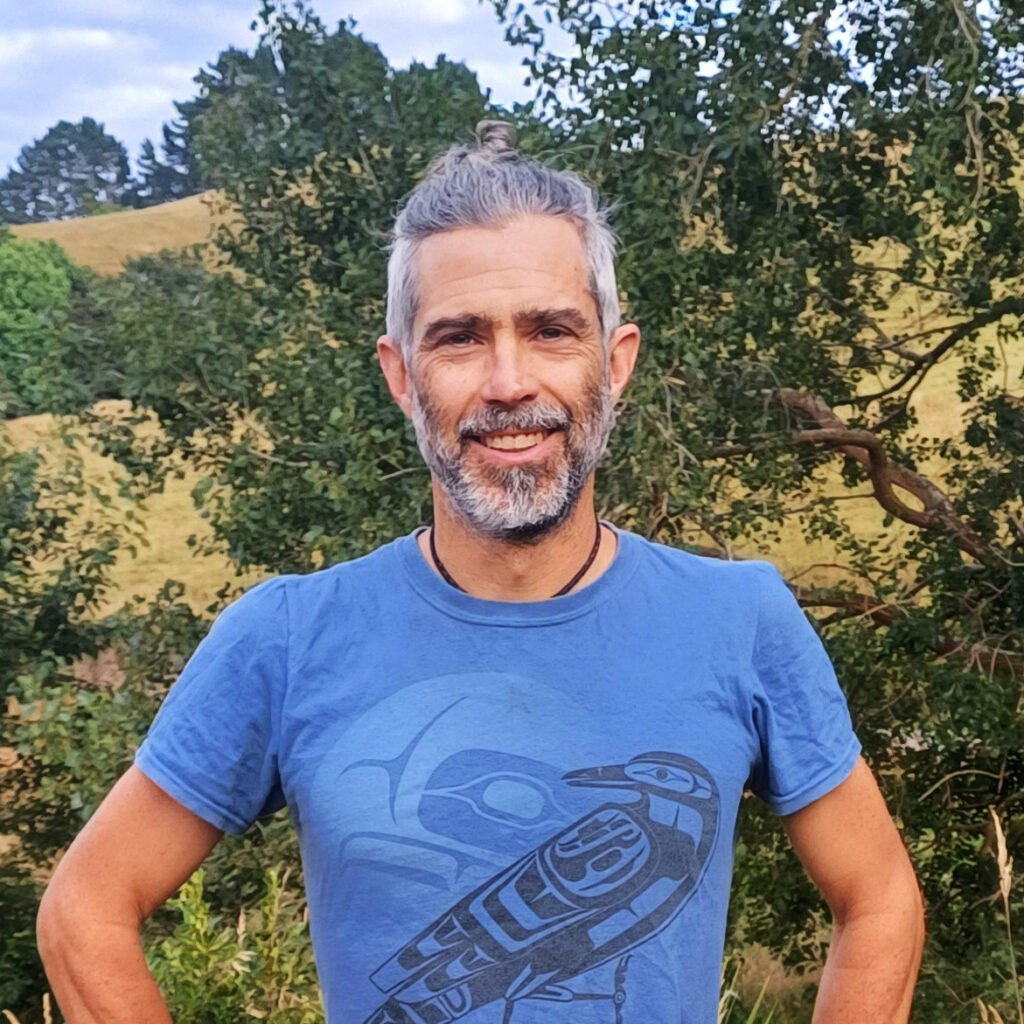
Finn is an educator, facilitator and design consultant with who has been teaching permaculture since 2008. Completing his permaculture diploma in 20212 on permaculture education, he is a PiNZ affiliated permaculture educator. His particular interests and skills are in design process, ecological literacy, curriculum design, social ecology and social innovation. He is co-founder of Aotearoa Permaculture Workshop, Resilio Studio, CommonGround Community Gardens, Transition Pt. Chevalier, Grey Lynn 2030, and Our Amazing Place (formerly Pt. Chevalier Treasure Hunt). Finn brings a thorough understanding of teaching pedagogy and practice, design education, accelerated learning practices, a love of human cultures and a breadth of experience and exposure to indigenous knowledge and sustainable practices from around the globe.
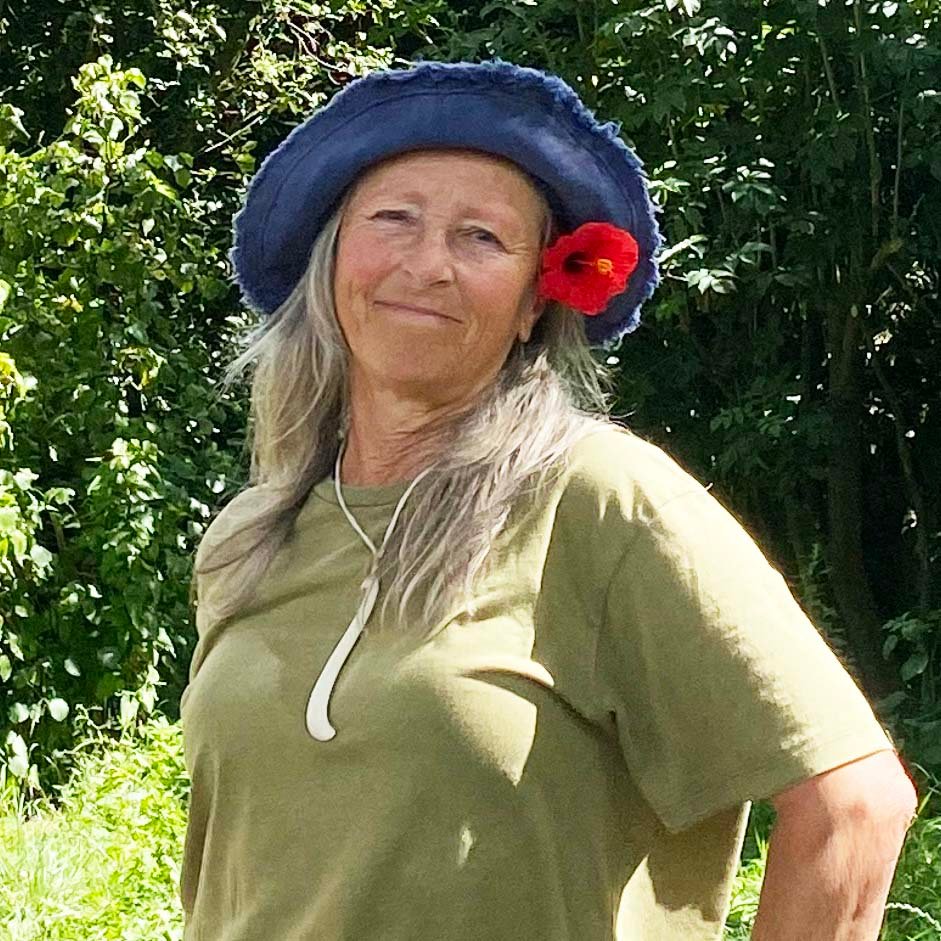
Liz Stanway is a trained ecologist with over 30 years’ experience working on endangered species, forest, wetland and marine restoration and preservation projects across New Zealand, the Pacific Islands, Wales, Mauritius and the Middle East. She has been practising permaculture alongside her partner Rick for more than 25 years and holds both a Permaculture Design Certificate and Diploma.
Liz lives on a six-hectare permaculture and organic property in Raglan, where she and Rick grow fruits, nuts, vegetables and herbs, and sustainably produce firewood and timber, contributing significantly to their livelihood.
She and Rick are founding members of Xtreme Zero Waste - Raglan Community’s award-winning zero waste programme, as well as the Whaingaroa Environment Centre and several other local environmental initiatives.
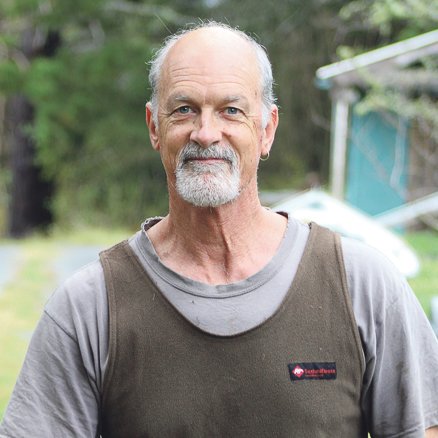
Rick lives with his partner Liz and their extended family on their permaculture farm in Whaingaroa/Raglan. They have lived there for the last 33 years.
Prior to life in Raglan Rick worked as an ecologist for various organisations and in numerous countries. Specialising in endangered species management and marine conservation Rick brings skills and experience in ecological interpretation to the Raglan PDC.
Rick is passionate about community enterprise and brings 3 decades of experience to the course around design, establishment and governance. He will draw on examples he has been involved in including Xtreme Zero Waste, Zero Waste Aotearoa, Te Mauri Tau, Pacific Vision Aotearoa. He will also share lessons learnt in the establishment of a network of community enterprises established in partnership with Auckland Council to deliver zero waste outcomes to Auckland City.

Tiaki Coates is of Waitaha, Kāti Māmoe and Kāi Tahu descent and lives in Whāingaroa with his hoa wahine and two tamariki. In 2025, they moved onto a 38-acre farm where they are restoring wāhi tapu, reforesting native kāhere, and cultivating the land using regenerative practices. In 2009 Tiaki lived for over a year with Rick Thorpe and Liz Stanway on their permaculture farm, learning to observe natural patterns and living systems that mirror traditional Māori and indigenous land practices - knowledge that continues to guide his mahi today.
His passion is supporting whānau Māori to thrive. He believes the solutions to many of today's problems lie within the wisdom of Te Ao Māori. With over 20 years experience in youth development and outdoor education, Tiaki has instructed Aoraki Bound for 10 years, advised Outward Bound on embracing Mātauranga Māori, and sailed close to 20,000 nautical miles around the Pacific onboard the voyaging canoe Te Matau-a-Māui. In 2015, he co-founded Poutama Rites of Passage, a kaupapa revitalising the ancient practice of Tohi to support tamariki and their whānau through the passage from childhood to adulthood.

He uri tēnei nō te Tai Rawhiti, tu mai ra a Hikurangi me tōna mana rangatira, ko Ngati Pōrou te iwi. Tiro atu ki te kakī o Nuhaka, Ko Ngati Kahungungu te Iwi. Nō Kōtirana, nō Aerana hoki. Ko Whāingaroa te kainga rua, ko Karioi te maunga ko Whāingaroa te moana.
Tyla is a teina amongst the whāingaroa permaculture community, their first exposure to permaculture was 7 years ago in the last Raglan PDC with Rick and Liz. It was a pivotal experience.
The PDC reinforced their emerging passion for regenerative food, land, community and lifestyle practices. Tyla managed the Te Mauri Tau kitchen and maara kai for 8 years, learning how to grow seasonal, nutrient dense kai and utilising it in the kitchen for wananga.
Tyla is now working with kaupapa māori organisation Poutama Rites of Passage hanging with māori youth, exploring māori identity and how it relates to the world around us. Weaving regenerative practice into the landscape of our youth alongside whakapapa māori, informed by our tīpuna.
Tylas māori and european ancestry places them between worlds and they feel it is their role to ask the questions and weave the strands. Where do the worlds of permaculture and māori identity meet? And where do they need to be woven?
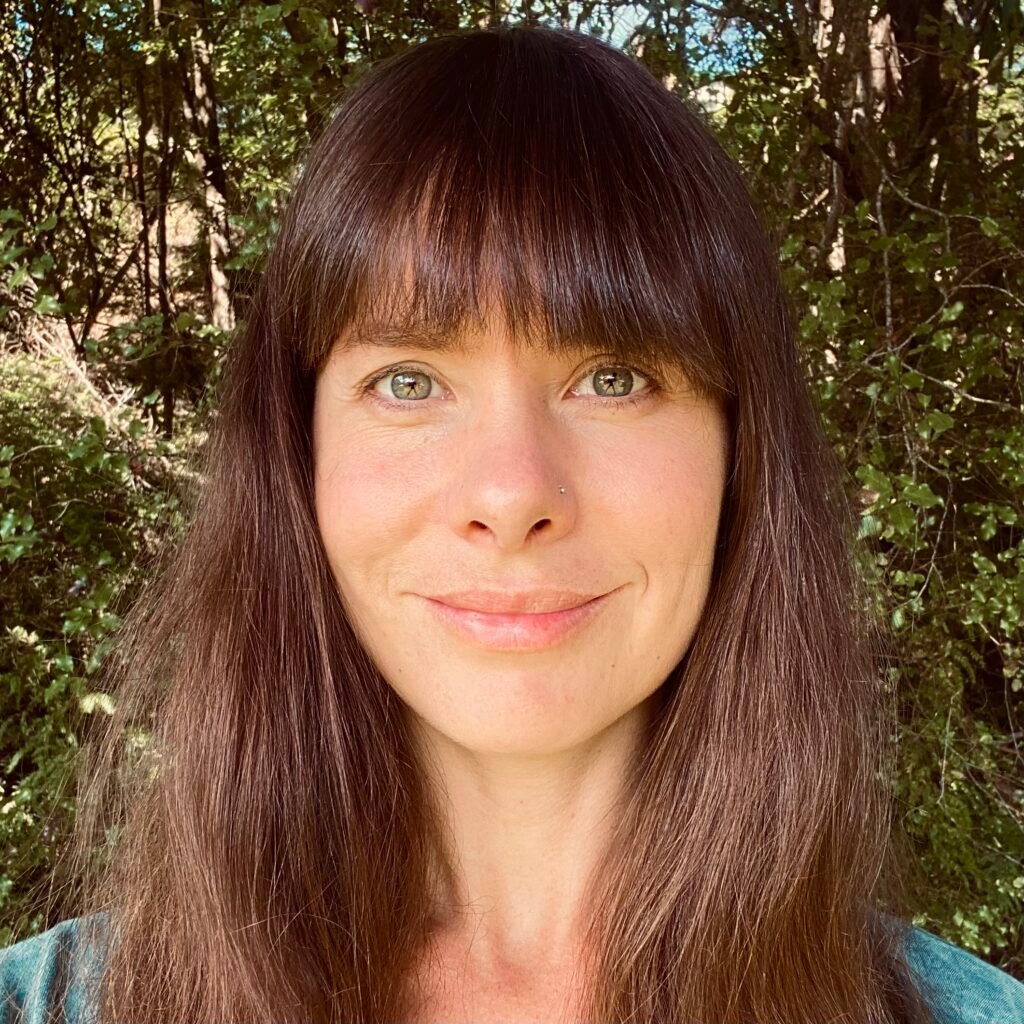
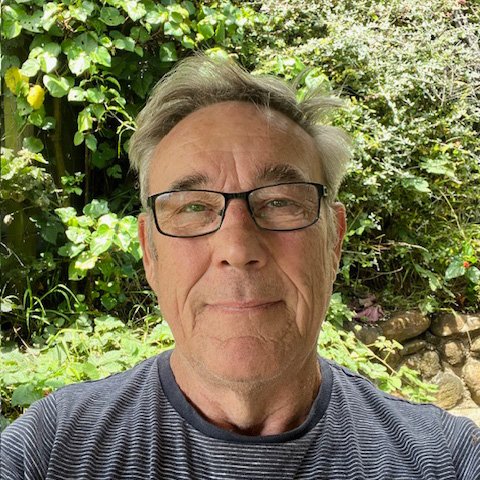
Ian was a designer and builder for 23 years, mostly in the UK and California. After coming back to NZ in 1999 and completing a Permaculture Design course, he designed and built his own "Eco" home in Raglan where he has lived with his family for more than 20 years. After working with Xtreme Zero Waste on a timber and building product recycling programme Ian was the Eco Design Advisor for 12 years at Hamilton City Council. As the EDA, he reckons he must have visited up to 10 houses a week and he's seen every type of problem a house can have. Ian is a member of the original "dream team" that developed the first HPA course that started back in 2013. Ian's an encyclopedia of home performance knowledge and has an almost uncontrollable passion for educating kiwis about home performance.
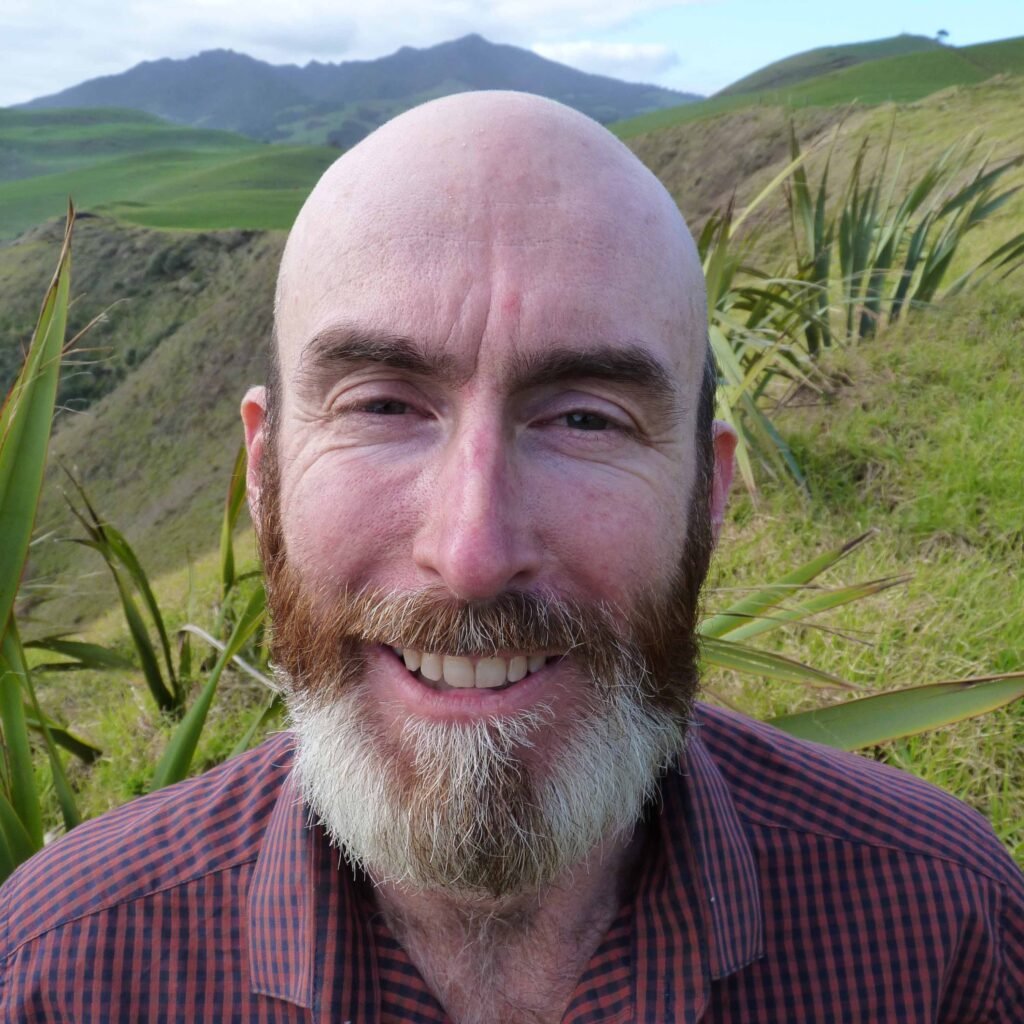
Simon Thomson is a drystock farmer from Ruapuke, Waikato, deeply committed to practical regenerative agriculture that supports climate and ecological resilience. On his farm, Simon has adopted innovative biological approaches to nutrient and waste management - most notably the regular release of dung beetles into his pastures.
By working with dung beetles, Simon aims to reduce effluent runoff and methane emissions at the source, making his farming system more productive and environmentally responsible. His approach reflects a broader commitment to sustainable land stewardship and climate-aware practice, and he speaks openly about the need for urgent action on climate change, including planning for sea-level rise and adaptation in vulnerable coastal landscapes.
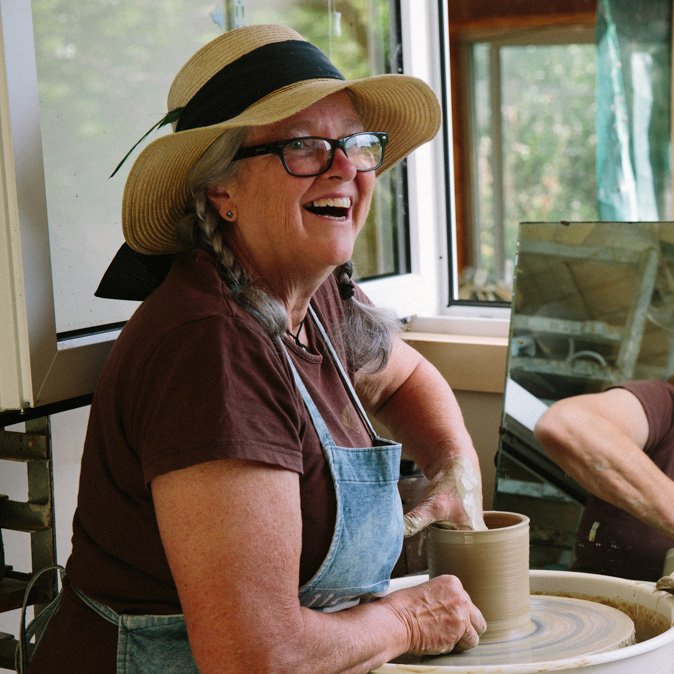
Clare Wimmer is a permaculturalist, potter, and sustainability educator based in Waitetuna Valley, Raglan, New Zealand. She lives on a self-sufficient one-hectare property where she applies Permaculture Design and Hua Parakore principles, integrating regenerative practices such as closed-loop water systems, food forests, and sustainable housing. A certified Permaculture Design and Teacher Training graduate, she previously served as Chair and Treasurer of Permaculture in New Zealand, coordinated the Permaculture Design Certificate program at the Waikato Environment Centre, and hosts WWOOFers to share hands-on knowledge. Her tagline, "I am changing the world, one WWOOfer at a time," reflects her commitment to community-based education and sustainable living.
In addition to her permaculture work, Clare is the part-time Business Manager at CLIMsystems, a global climate change consultancy supporting UN agencies and developing nations with climate risk data. She also co-runs Wimmer Design, a family business focused on tiny homes, and teaches pottery and olla-making workshops that blend creative expression with ecological resilience. With a background in psychology, facilitation, and systems thinking, Clare emphasizes holistic well-being, climate adaptation, and reconnecting people with the land through mindful, regenerative practices.
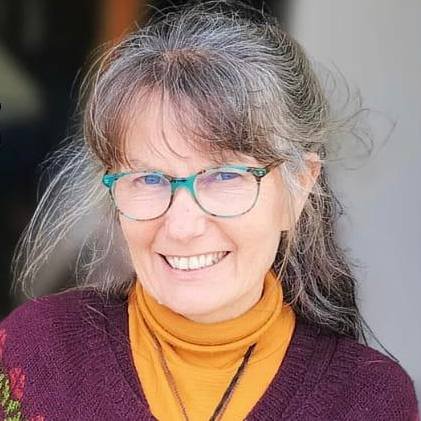
Tania is a community organiser and environmental advocate working across the Waikato, with a focus on food resilience, waste reduction, and strengthening community connections. In her role as Food Resilience Coordinator at the Whāingaroa Environment Centre, she supports projects that bring people together to grow, share, and value food. This includes facilitating food‑growing education, leading food‑sharing initiatives, and coordinating TimeBank Raglan. These projects help reconnect people with each other and the land.
She has co‑created and delivered a modular Permaculture Design Course with the Waikato Permaculture Collective and Go Eco. Her particular interest is urban permaculture and how it can inform more sustainable social systems, that reduce waste and consumption while building connection and care. She doesn’t claim to have all the answers, but believes that when communities draw on permaculture design principles, they have the tools to create a positive and vibrant future together.
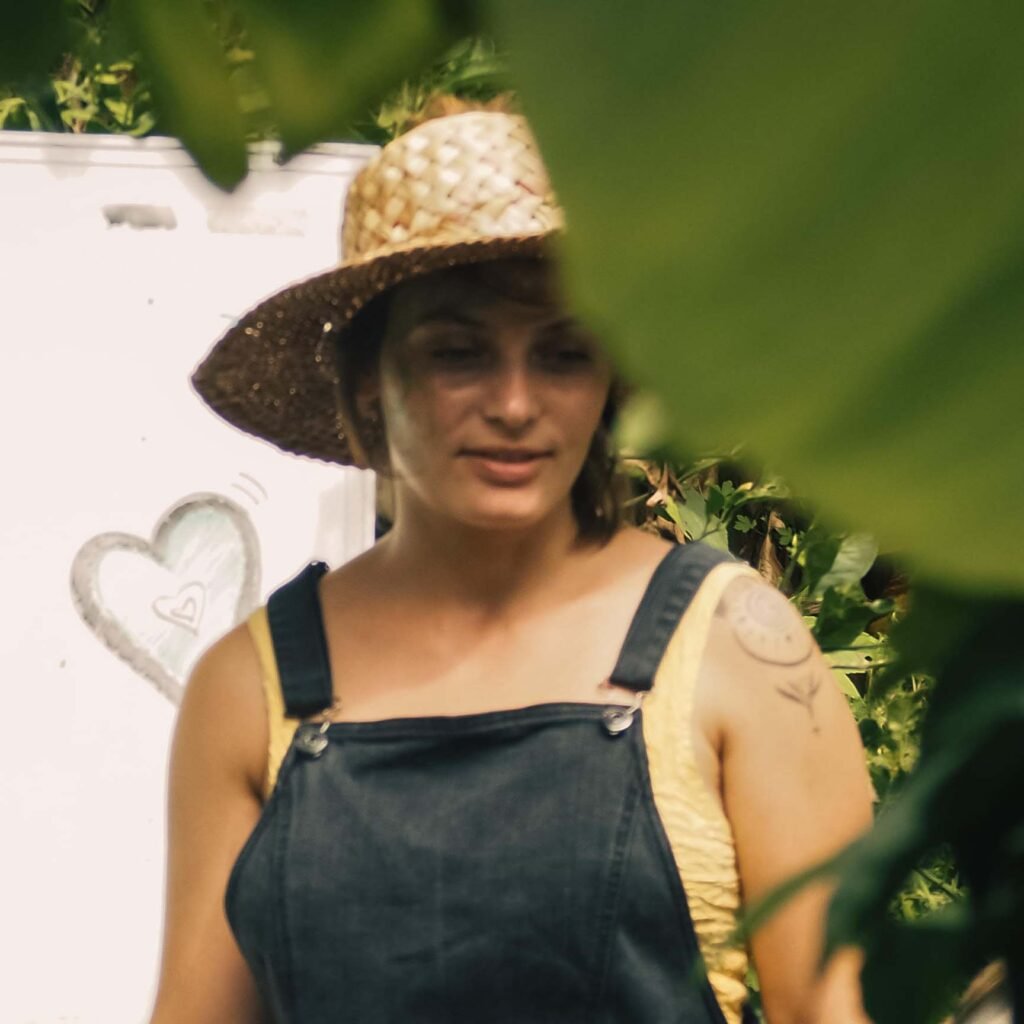
Merve is a permaculture facilitator and educator who has been working with permaculture principles for many years through hands-on projects, courses, and community workshops. She co-runs a permaculture farm and intentional community, where permaculture is lived and practiced daily through food forests, gardens, nature smart systems, and collective decision-making.
Her work is grounded in real-life experience: designing, planting, and tending regenerative landscapes while navigating the social and practical realities of living on the land with others. For Merve, permaculture is not only a way to design landscapes, but a powerful framework for designing life, supporting resilience, connection, and long-term wellbeing.
Merve brings a grounded, inclusive, and experiential approach to teaching, supporting learners to bridge theory with real life application and develop confidence in their own design process.
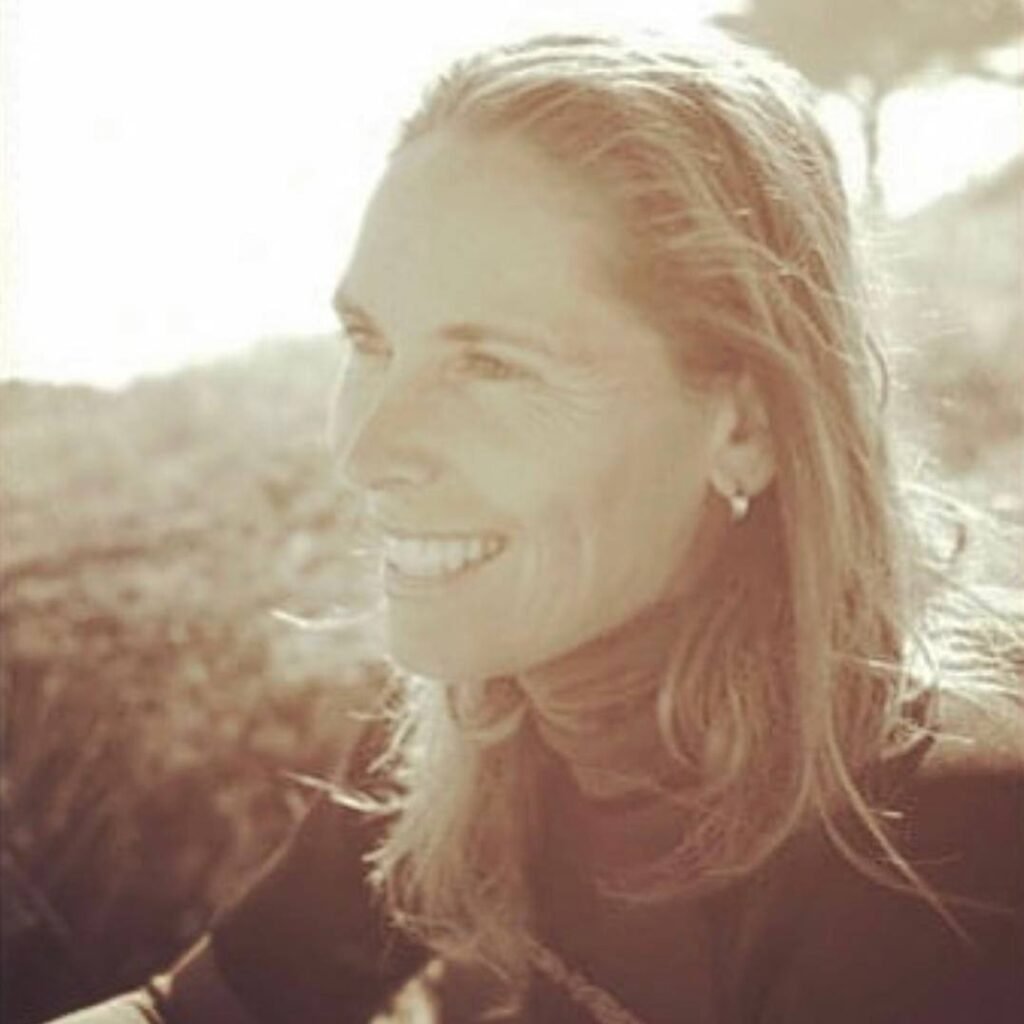
Bernadette has a life-long passion in supporting others in discovering
deeper alignment with Self, a greater sense of connection with nature, and
as a result, more understanding with each other.
deeper alignment with Self, a greater sense of connection with nature, and
as a result, more understanding with each other.
From 2002 - 2019 Bernadette and her partner co created Solscape Eco
Retreat in Raglan, an inspirational hub for travellers world wide, which
evolved along the basis of the permaculture principles.
During her 17 years at Solscape, Bernadette hosted numerous
permaculture design courses, and dedicated her time to supporting
hundreds of guests in harnessing their personal resilience and building self
empowerment through workshops, yoga, mindfulness practices; somatic,
energy and intuitive healing.
With clients based world wide, through her work as author, artist, animal
communicator, and spiritual mentor, Bernadette combines a gentle yet
profound way of guiding people in ways to develop ‘deep listening’ and
authentic expression, so as to be conscious and active participants in life,
where clarity and courage can flourish.
Permaculture Chat
Raglan Community Radio
Listen to lead tutor Finn Mackesy talk with Raglan Radio about the upcoming Permaculture Design Course beginning in March 2026.
Course Details
Course Overview
The course includes 10 full-day modules (8 hours each), running from March to October, held mostly on Sundays with two Saturday modules. In addition to the taught modules, participants complete a 20-hour permaculture design project, undertaken in their own time, with a design project presentation in November.
On completion of the course requirements, participants receive a PiNZ-affiliated Permaculture Design Certificate.
Attendance Requirements
To receive a Permaculture Design Certificate, participants must:
- Attend a minimum of 8 out of 10 modules
- Complete and present a permaculture design project
Participants who do not complete the design project are still welcome to attend the learning modules but will not be eligible to receive the certificate.
The Design Project
The PDC design project is a 20-hour commitment where students apply permaculture principles to a relevant project of their choosing. You do not need to know in advance what your permaculture design project will be. During the course, there are multiple opportunities to explore potential project ideas.
Experienced design mentors are available throughout the programme to support you to confirm your project brief, develop your design, and prepare for your final presentation.
Missed Modules
If you miss a module during the course, you can make it up by attending the same module in the following year at a reduced rate, provided there are spaces available.
Attending Individual Modules
If you are unable to commit to the full course, you may attend individual modules if spaces are available. Full-course participants are prioritised, but if the course is not full, casual attendance is welcome for as many modules as you choose.
Please note that attending individual modules does not contribute toward receiving a Permaculture Design Certificate unless you are enrolled as a full participant and meet the attendance and design project requirements.
2026 Course Dates
2026 Module Dates
- Philosophy & Design: Sunday 15 March
- Permaculture in Aotearoa – an indigenous and ecological perspective: Sunday 19 April
- Permaculture Design: Saturday 17 May
- Landscape Design – working with Nature: Saturday 17 May
- Appropriate Technology / Living Water & Soils: Sunday 21 June
- Permaculture, People and Community: Sunday 19 July
- Built Environment: Sunday 16 August
- Community Resilience: Saturday 19 September
- Food Systems & Productive Landscapes: Sunday 20 September
- Permaculture & Me – Zone 0 : Sunday 18 October
Design Project Presentations 1: 15 November – TBC
Design Project Presentations 2: 29 November – TBC
Pricing and
Registration
Investment
Early Bird – $2100 (full payment due by January 31, 2026)
Full Course Payment Schedule – $2300 (3 payment instalments: $850 deposit; $725 due on May 22; $725 due on July 24)
Partial Scholarships – If the course fees above are unaffordable please contact us to discuss your circumstance and explore opportunities for reduced course fees.
Please note, the course will be able to go ahead with 15 participants, and has a capacity for 20 participants.
How To Register
Contact: raglanpdc@gmail.com for registration and enquiries
”Though the problems of the world are increasingly complex, the solutions remain embarrassingly simple.
Bill MollisonPermaculture Co-Founder